
















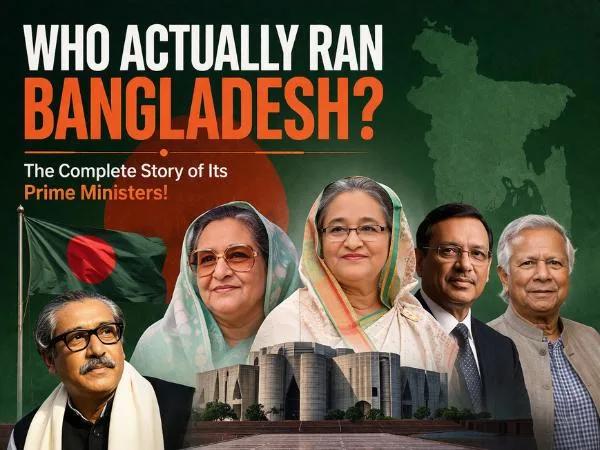
With all the crazy news lately about the political unrest in Bangladesh—especially when their Prime Minister suddenly resigned and fled the country in August 2024—the whole world is paying attention! But to really understand these modern crises, we have to look back at the history of the Prime Minister’s office. It’s a wild ride full of democratic wins, military takeovers, and intense rivalries!
It’s a Bit of a Maze!
Let’s be real: politics in South Asia can be a total maze. Trying to understand Bangladesh’s political history means looking at sudden rule changes, court battles, and overnight government shifts. You can’t just watch a quick news clip and get the whole picture! You really need to know the backstory to understand how the government works today.
Why the Backstory Matters
If you don’t know the history, massive events like the nationwide student protests in 2024 might seem like they came out of nowhere. But knowing the past explains all that built-up anger, the weak spots in the government, and the long power struggles that bring people out into the streets. Knowing the names of the people who steered the ship is the best way to understand the country’s modern vibe!
What We’re Looking At
This guide is going to give you a simple, straightforward look at the people who have actually held the top job in Bangladesh. We’ll walk through their time in office and what the country was like back then, so you can easily see how the Prime Minister’s role has changed over the years!
How It All Started (1971)
Let’s go back to 1971 when Bangladesh fought its Liberation War to become an independent country. During this incredibly tough time, a brave man named Tajuddin Ahmad stepped up as the very first Prime Minister! He ran the temporary government all the way from India, helping to keep the dream of independence alive and getting support from other countries when things were looking really dark.
The Founding Father Takes Charge
When the war finally ended, Sheikh Mujibur Rahman—the famous founding father of the nation—took over as Prime Minister in 1972. He had a massive job on his hands: rebuilding a broken country that was dealing with ruined roads, a wrecked economy, and terrible food shortages. He worked incredibly hard, but sadly, things got very unstable, and he and most of his family were tragically killed in a military coup in August 1975.
The Military Steps In
After that awful day, things got super chaotic. The military basically took over and set up martial law. For a few years, the Prime Minister’s job was totally sidelined or just wiped out completely! Military leaders, especially President Ziaur Rahman, called all the shots until he was also killed in 1981. During this time, the usual democratic rules were tossed right out the window.
also read : – Top 10 Biggest Snakes in the World: The Real Giants!
Bringing the Job Back in the 80s
In the 1980s, the Prime Minister title came back under another military ruler, Hussain Muhammad Ershad. But honestly, it was mostly just for show. The Prime Ministers back then—like Shah Azizur Rahman and Ataur Rahman Khan—didn’t have much real power, and they came and went pretty quickly. The regular people definitely weren’t happy about this; they wanted a real democracy where their votes actually mattered!
The Era of the Two Begums (1990-2006)
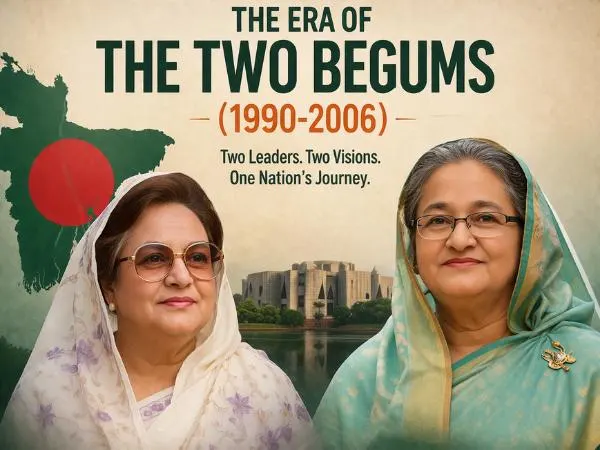
In 1990, the public finally pushed the military-backed government out, bringing real democracy back to the streets! This kicked off an epic, long-lasting rivalry between two super powerful women: Khaleda Zia (from the Bangladesh Nationalist Party) and Sheikh Hasina (from the Awami League).
Khaleda Zia, the widow of Ziaur Rahman, won the 1991 election and became the country’s first female Prime Minister! She focused heavily on opening up the economy. Then, in 1996, Sheikh Hasina (Sheikh Mujibur Rahman’s daughter) took the top spot. For the next twenty years, these two women basically took turns running the country. It was an era filled with intense, fierce politics and a lot of protests!
The Neutral Caretaker Fix
Because the two major parties completely distrusted each other, Bangladesh came up with a genuinely unique constitutional workaround: the Non-Party Caretaker Government system. Basically, when a government finished its term, they would hand power over to a neutral group (usually led by a former judge) for 90 days. This group’s only job was to make sure the next elections were fair and safe! People like Muhammad Habibur Rahman successfully ran this temporary setup, though politicians eventually found sneaky ways to mess with it.
The 2006 Crisis
By 2006, the political fighting got so bad that the military had to step in again to calm things down. A caretaker government led by Fakhruddin Ahmed took over for two whole years! They tried hard to clean up deep-rooted corruption and even put both Khaleda Zia and Sheikh Hasina in jail for a bit, hoping to fix the broken system before holding a fresh vote.
Sheikh Hasina’s Long Rule (2009-2024)
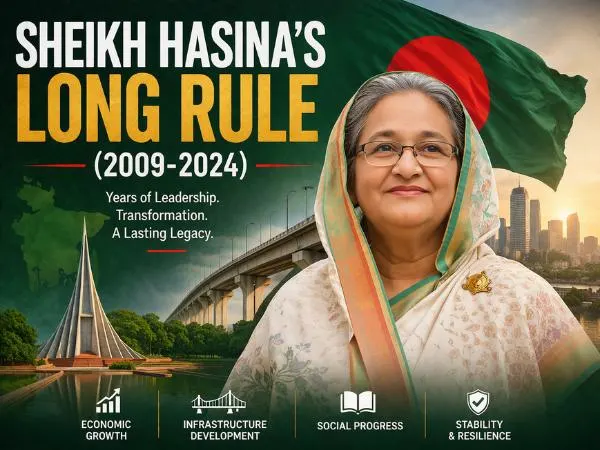
In 2008, Sheikh Hasina won a massive election and kicked off an uninterrupted 15-year rule! One of her first major, and highly controversial, moves was to completely scrap the neutral caretaker system.
Under her watch, the country’s economy boomed! They built huge bridges, fixed up the roads, and became a global powerhouse for making clothes. But on the flip side, she faced a ton of backlash. Critics said she ruled with an iron fist, locked up her opponents, and took away people’s voices. Because of this, the major opposition parties ended up boycotting a lot of the later elections.
The 2024 Crash
Hasina’s long rule came crashing down in the summer of 2024. What started as peaceful student protests over a controversial civil service quota system quickly exploded into a massive, nationwide uprising after the police responded with extreme force. With millions of angry people taking to the streets and the military refusing to back her up, Sheikh Hasina had no choice but to resign and flee to India.
also read : – Sicily Volcano Etna: Eruptions, History, Facts, and Why This Mountain Never Really Sleeps
A New Start with a Nobel Winner
With the government totally collapsed, the country needed a leader fast! They called in Dr. Muhammad Yunus, a famous economist and Nobel Peace Prize winner. He stepped up as “Chief Adviser” to calm the country down, keep people safe, and set the stage for fresh, fair elections.
The Complete Master List
Here is your ultimate cheat sheet—a simple, straight-up list of everyone who has held the top job (including the neutral Chief Advisers who ran the show during transitional times):
| Number | Name | Term in Office |
| 1 | Tajuddin Ahmad | 1971 – 1972 |
| 2 | Sheikh Mujibur Rahman | 1972 – 1975 |
| 3 | Muhammad Mansur Ali | 1975 |
| – | Job Scrapped by the Military | 1975 – 1979 |
| 4 | Shah Azizur Rahman | 1979 – 1982 |
| – | Job Scrapped by the Military | 1982 – 1984 |
| 5 | Ataur Rahman Khan | 1984 – 1985 |
| 6 | Mizanur Rahman Chowdhury | 1986 – 1988 |
| 7 | Moudud Ahmed | 1988 – 1989 |
| 8 | Kazi Zafar Ahmed | 1989 – 1990 |
| 9 | Khaleda Zia | 1991 – 1996 |
| 10 | Muhammad Habibur Rahman (Chief Adviser) | 1996 |
| 11 | Sheikh Hasina | 1996 – 2001 |
| 12 | Latifur Rahman (Chief Adviser) | 2001 |
| 13 | Khaleda Zia | 2001 – 2006 |
| 14 | Iajuddin Ahmed (Chief Adviser) | 2006 – 2007 |
| 15 | Fakhruddin Ahmed (Chief Adviser) | 2007 – 2009 |
| 16 | Sheikh Hasina | 2009 – 2024 |
| 17 | Muhammad Yunus (Chief Adviser) | 2024 – Present |
Frequently Asked Questions (FAQ)
Who was the very first Prime Minister?
Tajuddin Ahmad was the very first! He led the temporary government back in 1971 while the country was fighting its war for independence.
Who held the job the longest?
Sheikh Hasina definitely holds the record. She ruled for over twenty years in total, including a solid 15-year run straight from 2009 to 2024!
Why did the military keep stepping in?
In the early days, the country struggled with poverty and highly unstable politics. Military leaders often used that chaos as an excuse to step in and take control of the government.
What exactly is a Caretaker Government?
It was a clever political setup where a neutral, non-political group took over for 90 days right before an election. Their only job was to make sure the ruling party couldn’t cheat, keeping the vote totally fair!
Why did Sheikh Hasina step down in 2024?
Student protests over civil service jobs turned into a massive nationwide uprising after the police used severe force. Facing millions of angry protesters and losing the army’s support, she had to resign and leave the country.
Final Thoughts
Looking at the history of Bangladesh Prime Ministers shows you just how tough it is to build a brand new country! From the struggles of the 1970s to the fierce rivalries of the 90s, all the way up to the massive protests of 2024, the country has seen some crazy ups and downs. Now, with an interim leader at the wheel, Bangladesh is trying to start fresh and build a fair, stable democracy for everyone!