













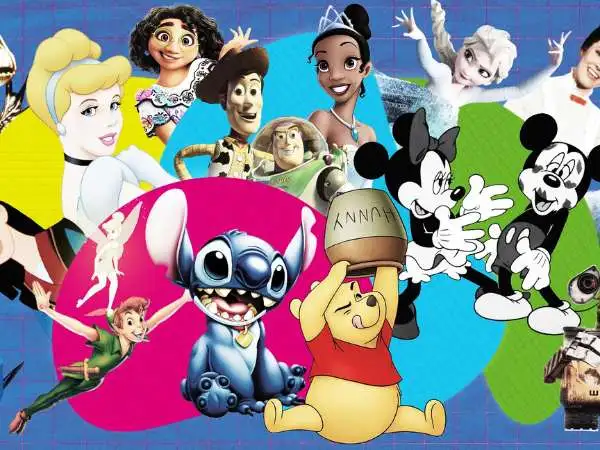
Let’s be honest.
Disney princesses usually get the spotlight.
But Disney male characters? Some of them carry entire films. Some bring emotional depth people overlook. Some evolve more than we remember.
I rewatched several classics before writing this. Not just clips. Full films. I paid attention to growth arcs, voice acting, cultural impact, and how well each character holds up today.
Nostalgia helps. But it doesn’t decide this list.
This ranking is about impact, development, personality, and staying power.
Here are the 25 best Disney male characters, ranked with balanced critique and context.
25. Prince Eric — The Little Mermaid
Eric often gets labeled as “just the prince.”
That’s lazy.
He’s kind, curious, and actually listens. He falls in love with Ariel’s voice before her appearance drives the story forward.
He isn’t flashy.
But steady kindness matters.
24. Kristoff — Frozen
Kristoff starts gruff.
Then we realize he’s emotionally open, awkward, and refreshingly supportive.
He doesn’t need to dominate the story. He complements it.
That quiet confidence earns him a place here.
also read : – Paul Mescal Movies and TV Shows: From Normal People Breakout to Blockbuster Stardom
23. Aladdin — Aladdin
Aladdin thrives on charm.
He lies early. That flaw drives the conflict. He grows through humility.
The street-smart survival instinct makes him compelling.
His arc feels earned, not handed to him.
22. Tarzan — Tarzan
Tarzan’s physical presence dominates.
But emotionally, he’s searching for identity.
His struggle between two worlds drives the film’s heart.
And yes, Phil Collins helps. A lot.
21. Hercules — Hercules
Hercules wants to belong.
That’s his core motivation.
He trains hard. Fails publicly. Learns what true heroism means.
He isn’t perfect. That makes him relatable.
20. Li Shang — Mulan
Li Shang represents discipline and duty.
His respect for Mulan grows through action, not speeches.
That slow shift feels authentic.
He evolves without losing authority.
also read : – Band Members of Linkin Park: Then, Now, and How the Lineup Shaped the Band’s Sound
19. Beast — Beauty and the Beast
The Beast begins arrogant and cruel.
His redemption depends on change, not charm.
Watching him learn patience and empathy carries weight.
Transformation works when it feels deserved.
18. Flynn Rider (Eugene Fitzherbert) — Tangled
Flynn enters as a smirking thief.
Then layers appear.
He’s funny. Defensive. Soft underneath.
His sacrifice moment shifts him from comic relief to genuine hero.
17. Prince Naveen — The Princess and the Frog
Naveen starts spoiled.
He learns quickly.
Hard work changes him. Love humbles him.
His arc is one of Disney’s clearer growth journeys.
16. Woody — Toy Story
Woody is flawed from the beginning.
Jealous. Controlling. Insecure.
Over multiple films, he matures.
Leadership becomes less about control and more about care.
That long arc matters.
15. Buzz Lightyear — Toy Story
Buzz begins delusional.
He truly believes he’s a space ranger.
His identity collapse scene remains powerful decades later.
Watching him accept reality without losing confidence elevates him.
14. Simba — The Lion King
Simba’s journey is responsibility.
He runs from guilt. Avoids confrontation.
Then returns.
His arc feels mythic but grounded in grief.
Few Disney male characters carry that emotional scale.
also read : – Cast of Dazed and Confused: Main Characters, Breakout Actors, and Why the Film Still Feels Real
13. Maui — Moana
Maui hides insecurity behind bravado.
He performs confidence.
But the story reveals fear of abandonment.
That emotional layer strengthens him.
12. Quasimodo — The Hunchback of Notre Dame
Quasimodo’s kindness feels pure.
He longs for acceptance without bitterness.
His isolation scenes hit harder as an adult viewer.
He might be one of Disney’s most compassionate leads.
11. Nick Wilde — Zootopia
Nick thrives on sarcasm.
Underneath, he carries past rejection.
His partnership with Judy grows naturally.
He earns redemption through action.
10. Baymax — Big Hero 6
Baymax isn’t human.
But he embodies care.
His calm tone contrasts with chaos.
He doesn’t evolve dramatically. He doesn’t need to.
He functions as emotional support done right.
9. T’Challa — Black Panther
Yes, Marvel counts under Disney ownership.
T’Challa represents responsibility under pressure.
His debate with Killmonger challenges inherited beliefs.
Leadership for him means listening.
That nuance places him high.
also read : – What Episode Does Ace Die in One Piece Manga?
8. Captain Jack Sparrow — Pirates of the Caribbean: The Curse of the Black Pearl
Jack balances chaos and calculation.
He appears drunk on luck.
He isn’t.
Johnny Depp’s performance defined the character.
Later films dilute him slightly. The original still stands strong.
7. Peter Pan — Peter Pan
Peter represents freedom.
But rewatching reveals selfishness too.
He resists growth completely.
That tension makes him more interesting than a simple hero.
6. Miguel — Coco
Miguel chases passion.
His journey centers on family truth.
The emotional climax lands deeply.
His courage comes from love, not rebellion.
5. Hades — Hercules
Hades steals scenes.
Fast-talking. Sharp. Animated rage.
He mixes humor with menace.
One of Disney’s most entertaining villains.
4. Genie — Aladdin
Robin Williams changed animation voice acting here.
Genie feels alive.
He balances comedy with genuine warmth.
Without him, the film shifts dramatically.
3. Mufasa — The Lion King
Mufasa’s screen time is limited.
His impact is not.
He represents guidance and moral strength.
His death scene shaped a generation.
also read : – Riddick Movies in Order to Watch: A Complete Guide
2. Iron Man (Tony Stark) — Iron Man
Tony Stark evolves across a decade of films.
Arrogant genius becomes selfless protector.
His final sacrifice lands because we watched the growth happen.
Long arcs matter.
1. Mickey Mouse — Mickey Mouse
It comes back to Mickey.
Simple design. Massive influence.
He shaped the brand. He shaped animation history.
You may not rank him as your favorite.
But culturally? He stands alone.
How I Chose These Characters
I looked at:
- Cultural impact
- Emotional depth
- Growth arc
- Voice performance
- Longevity
If a character felt flat across rewatches, they dropped.
If they gained depth over time, they rose.
also read : – Why So Many People Love Cartoons
Final Thoughts
Disney male characters often start simple.
The best ones grow.
They confront flaws. They shift perspective. They carry emotional weight.
You might disagree with this ranking.
That’s fine.
If anything, it proves how strong the bench really is.
And honestly, that’s the fun part.